Coming soon · Release date: October 14, 2026 · Info based on official announcements
UpdatedTHANKS, LIGHT. trailer and screenshots: Launch Guide
Explore THANKS, LIGHT. trailer and screenshots, learn how its light-based puzzles work, and check the October 14 release details before you wishlist it.
Jump to
Where to Watch and What to Know Before Launch
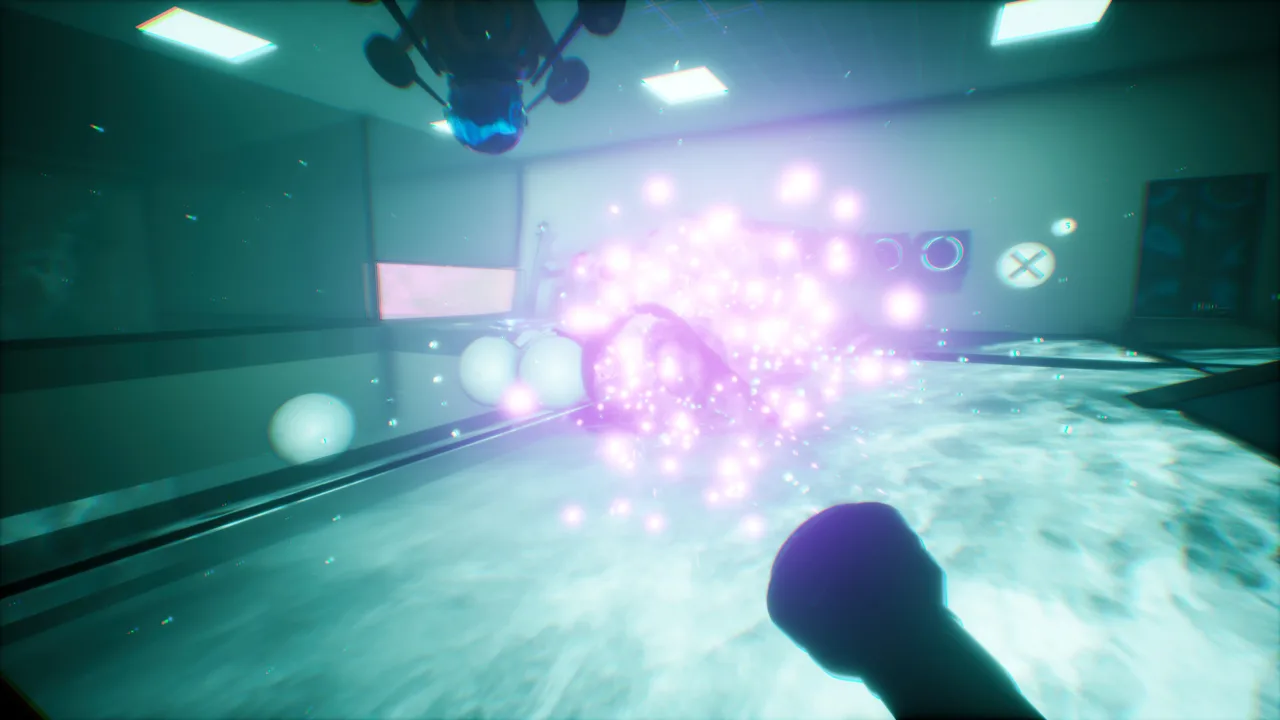
A shadow might look harmless until your flashlight gives it enough weight to change the room. The THANKS, LIGHT. trailer and screenshots introduce a first-person puzzle adventure where illumination changes geometry, collision, and gravity, making its central idea worth understanding before launch. If you’re browsing the THANKS, LIGHT. trailer and screenshots, focus on how objects change between flat outlines and solid forms: that transformation explains the game’s appeal more clearly than its mysterious setting alone.
Developed by Lightersgames and published by Game Source Entertainment, the game is scheduled to release on October 14, 2026. As of October 9, it remains an upcoming release, with a downloadable demo listed on Steam.
| Launch detail | Current information |
|---|---|
| Scheduled release date | October 14, 2026 |
| Official website launch time | 8:00 AM PDT / 3:00 PM UTC |
| PC storefronts | Steam and Epic Games Store |
| Developer | Lightersgames |
| Publisher | Game Source Entertainment |
| Advertised scope | Three chapters, 60+ stages, and 6+ hours of play |
| Demo | Listed for download on Steam |
Those scope figures describe the advertised game, rather than a guaranteed completion time. How long you spend experimenting with a spatial puzzle can vary, so treat the advertised 6+ hours as a planning reference.
The official website includes a trailer section and a screenshot gallery organized by chapter. Steam also hosts promotional video and screenshot media. You can view the trailer, browse screenshots, and download the Steam demo from the game’s store page.
For a useful viewing session, start with the trailer to understand the basic transformation, then inspect still images for object shapes and room layouts. The THANKS, LIGHT. trailer and screenshots serve different purposes: motion helps explain changing physics, while still frames give you time to consider what a silhouette might become.
Read the Trailer Through Its Light-and-Shadow Rules
The central mechanic is straightforward to describe but leaves room for complicated puzzles. Illuminate a flat silhouette, and it becomes a three-dimensional object with physical properties. Absorb its light, and it loses volume and mass, returning to a static, weightless outline.
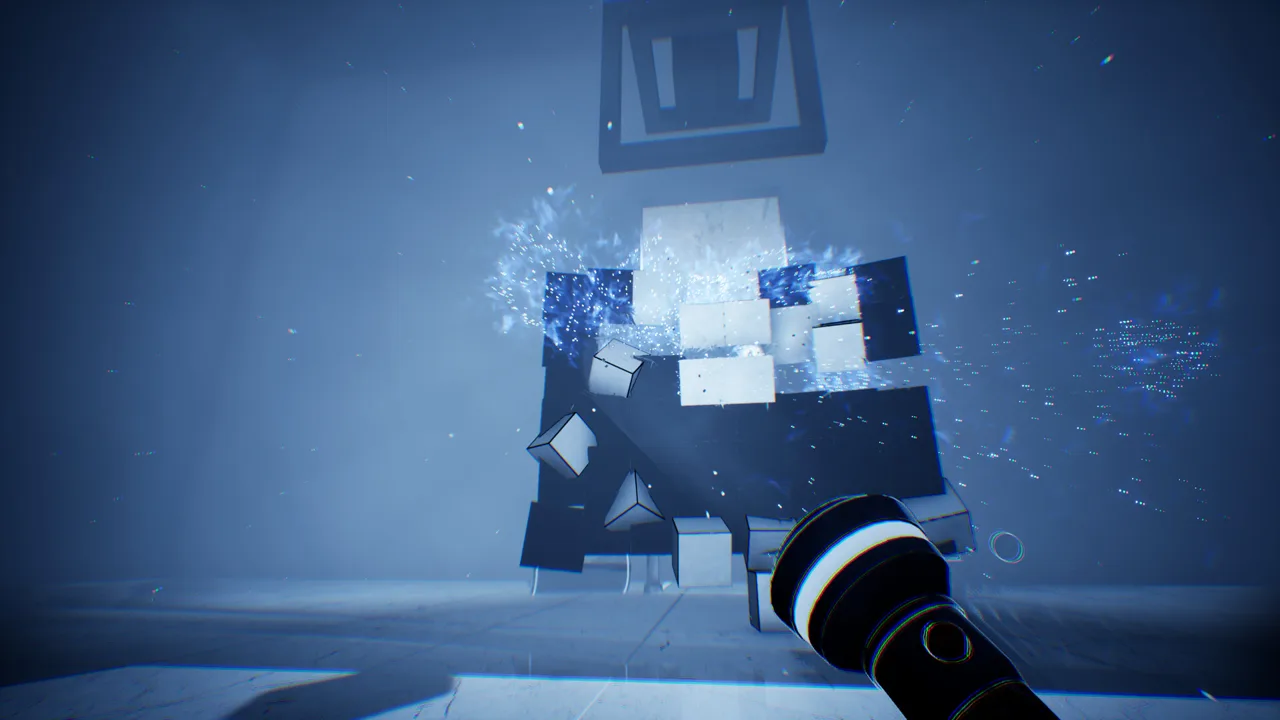 Image: Steam / Lightersgames
That makes the flashlight more than a tool for seeing in dark rooms. It changes which objects can support you, obstruct you, or interact with other objects.
The game’s examples include a flat hexagon becoming a cube you can stand on and a rolling ball becoming a motionless circle on a wall. Steam also describes a cube serving different purposes, such as tipping a seesaw or blocking a rolling ball.
| Mechanic | Described effect | What to watch for |
|---|---|---|
| Illuminate | Gives silhouettes a solid form, weight, and collision | Whether an object becomes a platform, obstacle, or movable tool |
| Absorb | Removes volume and mass, leaving a flat silhouette | How flattening changes movement or clears an obstruction |
| Mirror | Duplicates objects | How an additional object could affect a puzzle |
| Lens | Resizes objects | How size changes an object’s possible uses |
| Merge | Combines forms into a new form | What the resulting shape could accomplish |
When watching the THANKS, LIGHT. trailer and screenshots, a good approach is to track one object through its changes. Ask what it can do while solid and what becomes possible when it is flat.
The geometry adds another layer. The official website illustrates how a single three-dimensional object can produce a circle, square, or triangle silhouette depending on perspective. Matching outlines therefore don’t necessarily mean matching objects.
That gives you a practical viewing habit: consider the relationship between the outline and its possible volume. A familiar shape may conceal something with a very different function once illuminated.
Use the Screenshots to Compare the Three Chapters
The official screenshot gallery contains three images under each chapter heading. Its organization gives you a useful way to browse: compare each chapter’s stated mechanic alongside the broader changes in atmosphere.
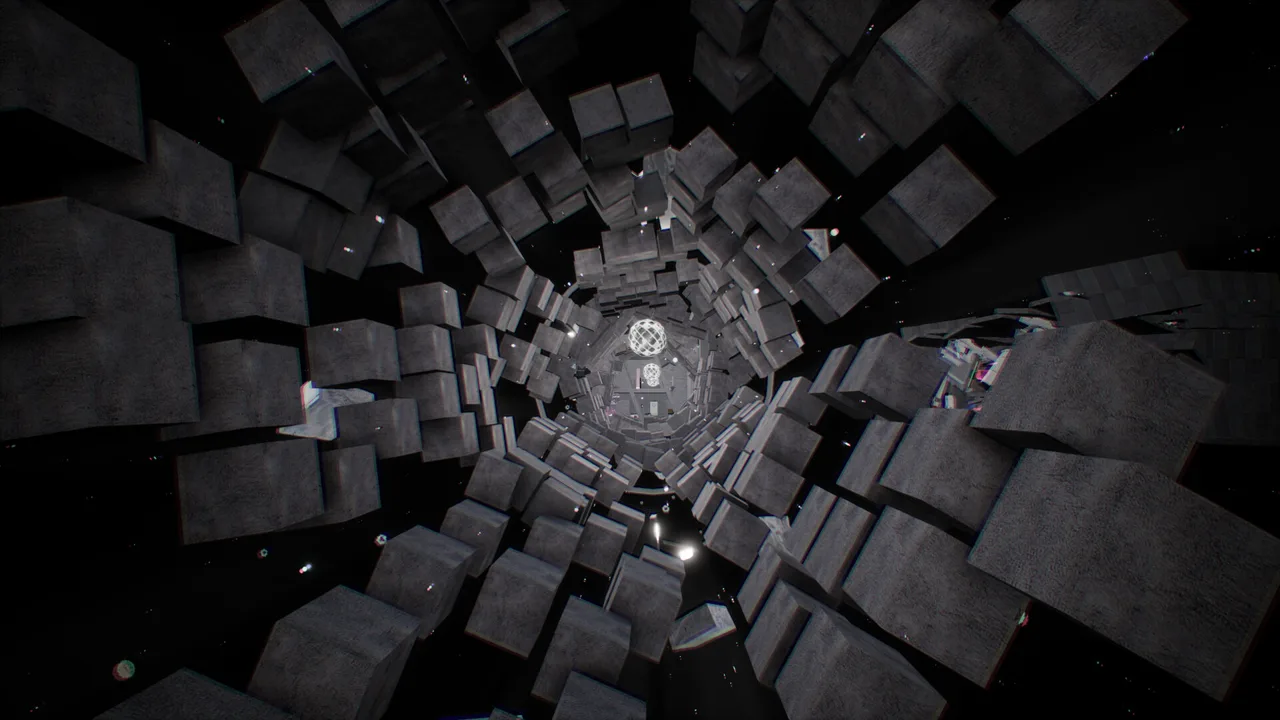 Image: Steam / Lightersgames
The game describes environments ranging from marble halls to strangely familiar corridors and fractured black-and-white spaces. The Epic Games Store description also presents a progression from a museum-like setting to repeating office architecture and a space where memories intrude.
These descriptions establish variety, but they don’t explain every room or puzzle. Let the gallery introduce the visual direction without treating individual images as a complete walkthrough.
| Official gallery section | Images listed | Mechanic named in the heading |
|---|---|---|
| Chapter 1 — Illuminate | Three | Making silhouettes solid with light |
| Chapter 2 — Absorb | Three | Removing light to flatten objects |
| Chapter 3 — Mirror, Lens & Merge | Three | Duplication, resizing, and combining forms |
A helpful way to examine the THANKS, LIGHT. trailer and screenshots is to separate atmosphere from puzzle information. Architecture establishes mood; object placement may help you think about possible interactions.
Try looking for:
- Silhouettes and solid forms: Consider whether an outline could become something useful.
- Objects with multiple potential roles: A cube can provide weight or act as a barrier.
- Spatial relationships: Think about how an object’s position might affect access or movement.
- Changes in visual style: Compare how the environments support the game’s increasingly strange premise.
These are viewing suggestions based on the described mechanics, rather than solutions to specific pictured stages.
The narrative centers on an Administrator who claims to have designed a perfect puzzle experience. Cracks in that controlled world create the mystery behind the rooms. The store descriptions also mention unsettling spaces and beings hidden in shadows.
Expect an eerie framing around the puzzles, though promotional material alone doesn’t establish how frequent or intense the threatening encounters will be.
Puzzle Ideas to Keep in Mind While Watching
The THANKS, LIGHT. trailer and screenshots are easier to interpret if you think in terms of object states and functions. Instead of asking only what an object is, ask what job it could perform.
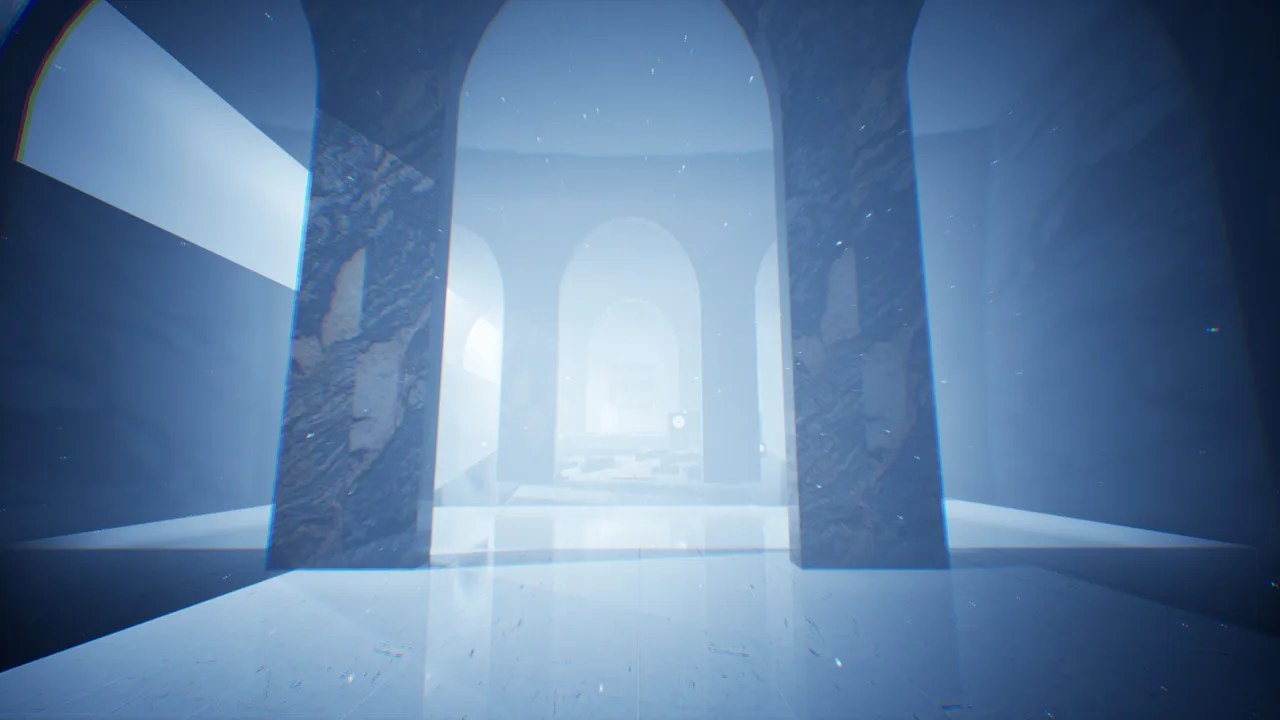 Image: Steam / Lightersgames
A cube illustrates that distinction well. Its weight can influence a seesaw, while its solid body can block a rolling ball. Flattening it removes the physical properties that make those interactions possible.
A good approach is to keep both versions of an object in mind:
- While illuminated: Consider its weight, collision, dimensions, and possible uses.
- While flattened: Consider what removing its volume and mass changes.
- After another transformation: Consider how duplication, resizing, or merging might alter its role.
Consider physical properties before appearances
A recognizable outline may encourage an immediate guess about its purpose. The game’s geometry suggests a more useful question: what properties would help solve the problem?
If you need weight, a solid object matters. If an obstruction needs to disappear, absorbing light may be relevant. These are general deductions from the stated rules, rather than guaranteed answers to any particular stage.
Think about timing as well as shape
Steam describes puzzles involving decisions about what to keep solid, what to flatten, and when to change each object. A good approach is to consider the order of transformations.
For example, flattening a cube that was blocking a rolling ball changes that interaction. Before making such a change, consider what the remaining objects can still do.
Reconsider familiar objects when mechanics combine
Mirrors, lenses, and merging expand the possibilities beyond switching physics on and off. Duplication changes the available objects; resizing changes their dimensions; merging creates another form.
The game advertises these mechanics as combinations that become increasingly intricate. When considering a puzzle, it may help to revisit an object you already understand and ask whether another transformation gives it a different use.
Demo, Steam Deck, and PC Launch Preparation
Once the THANKS, LIGHT. trailer and screenshots have caught your attention, the Steam demo offers a way to move from watching to trying the game. Its listing doesn’t establish how much of the full release it covers, so avoid assuming that it includes every chapter or mechanic.
Use it to assess the basic interaction, camera comfort, and whether the spatial puzzles interest you. Steam lists subtitle options, camera comfort features, and custom volume controls, although the listing doesn’t describe every adjustable setting.
For PC preparation, the storefront specifications differ. Steam currently lists the following requirements:
| Component | Steam minimum | Steam recommended |
|---|---|---|
| Operating system | Windows 10 64-bit, version 1909 or later | Windows 10 64-bit or Windows 11 |
| Processor | Intel Core i5-9400 / AMD Ryzen 5 3500X | Intel Core i5-10600 / AMD Ryzen 5 3600 |
| Memory | 8 GB RAM | 16 GB RAM |
| Graphics | GTX 1660, 6 GB / Radeon RX 590, 8 GB | RTX 2060, 6 GB / Radeon RX 5700, 8 GB |
| Storage | 10 GB available | 12 GB available |
| Stated performance target | 1080p, 30 fps, Medium settings | 1080p, 60 fps, High/Ultra settings |
Steam specifies DirectX 11 and recommends an SSD. These performance figures are listed targets, rather than promises for every hardware configuration.
Epic lists a GTX 1060 minimum GPU and smaller storage requirements. Because the storefronts disagree, check the requirements on the store where you intend to play before purchasing.
Steam also lists the game as Steam Deck Verified. That designation is useful for handheld shoppers, but it doesn’t provide a specific frame-rate or battery-life guarantee.
English interface, full audio, and subtitles are listed on Steam, alongside support for 20 additional interface and subtitle languages. Steam achievements and Steam Cloud are also listed features. Before launch, you can wishlist the game, try the demo, and decide whether its combination of physical objects, changing geometry, and unsettling architecture fits your puzzle preferences.
FAQ
Where can I watch the THANKS, LIGHT. trailer and screenshots?
The official Lightersgames website includes a trailer section and chapter-organized screenshots. The Steam store page also hosts promotional media. You can browse the Steam media gallery and access the listed demo from the same page.
When does THANKS, LIGHT. release?
The current Steam and Epic Games Store listings show October 14, 2026. The official website gives a launch time of 8:00 AM PDT, equivalent to 3:00 PM UTC. As of October 9, the full game is still listed as upcoming.
How does the flashlight change objects?
Illumination turns flat silhouettes into solid objects with weight, collision, and physics. Absorbing light removes their volume and mass. The game also includes mirrors for duplication, lenses for resizing, and merging to combine forms.
How much content is advertised, and is there a demo?
The game advertises three chapters, more than 60 stages, and 6+ hours of play. Actual completion time may vary. Steam lists a downloadable demo, but its description here doesn’t specify how much of the full game it includes.
Continue with
 THANKS, LIGHT. demo: Download, Puzzles, and PC SpecsPlay the THANKS, LIGHT. demo on Steam. Explore light-based puzzles, check PC requirements, and learn how this demo differs from the October 2026 release.
More in Release
THANKS, LIGHT. developer and publisher: Who Makes It?
Meet the THANKS, LIGHT. developer and publisher, explore its light-based puzzles, and check the planned release date, demo, and Steam Deck support today.
THANKS, LIGHT. FAQ: Release Date, Demo and PC Details
THANKS, LIGHT. FAQ covers the October 14 release, demo, Steam Deck status, PC specs, and light-based puzzles. Find out what to expect ahead of launch.
THANKS, LIGHT. platforms and wishlist: Your Launch Guide
THANKS, LIGHT. platforms and wishlist guide: check Steam launch timing, PlayStation status, Steam Deck support, and how to track a light-powered puzzler.
THANKS, LIGHT. release date countdown: Launch Guide
Track THANKS, LIGHT. release date countdown for October 14, 2026, at 8 AM PDT. Check launch timing, Steam Deck status, demo access, and PC requirements.
Join the community
Official channels for news, updates and player help: