
Coming soon · Release date: October 14, 2026 · Info based on official announcements
UpdatedTHANKS, LIGHT. FAQ: Release Date, Demo and PC Details
THANKS, LIGHT. FAQ covers the October 14 release, demo, Steam Deck status, PC specs, and light-based puzzles. Find out what to expect ahead of launch.
Jump to
Release Date, Launch Time, and What to Expect
A shape on the wall could become the solid object you need to solve a puzzle—if you give it light. This THANKS, LIGHT. FAQ explains the release schedule, demo availability, and hardware requirements so you can decide whether to jump in. With launch approaching, the THANKS, LIGHT. FAQ also breaks down how illumination, shadows, and perspective turn familiar shapes into unusual puzzle tools.
THANKS, LIGHT. is scheduled to release on October 14, 2026. The developer’s website lists a launch time of 8:00 a.m. PDT, equivalent to 3:00 p.m. UTC. As of October 9, the Steam listing still describes the full game as upcoming.
| Release detail | Current information |
|---|---|
| Scheduled release date | October 14, 2026 |
| Announced launch time | 8:00 a.m. PDT / 3:00 p.m. UTC |
| Developer | Lightersgames |
| Publisher | Game Source Entertainment |
| Confirmed store listing | Steam |
| Current full-game availability | Not yet available |
An older Steam announcement mentions October 15, which may cause confusion if you encounter it separately. The current Steam release field and developer website both display October 14, so that is the date to use for planning. Check the store again near launch in case the schedule changes.
The game comes from Lightersgames, an indie studio based in South Korea. Its central idea is straightforward: light gives objects physical form, while removing that light turns them back into flat silhouettes.
That premise matters because your puzzle tools are more flexible than their outlines suggest. A shape can change between something you can physically use and something without volume or mass. Understanding that switch is the foundation for the spatial challenges ahead.
How Light, Shadows, and Perspective Work
The gameplay portion of this THANKS, LIGHT. FAQ starts with a useful distinction: an object’s outline does not tell you everything about its three-dimensional form.
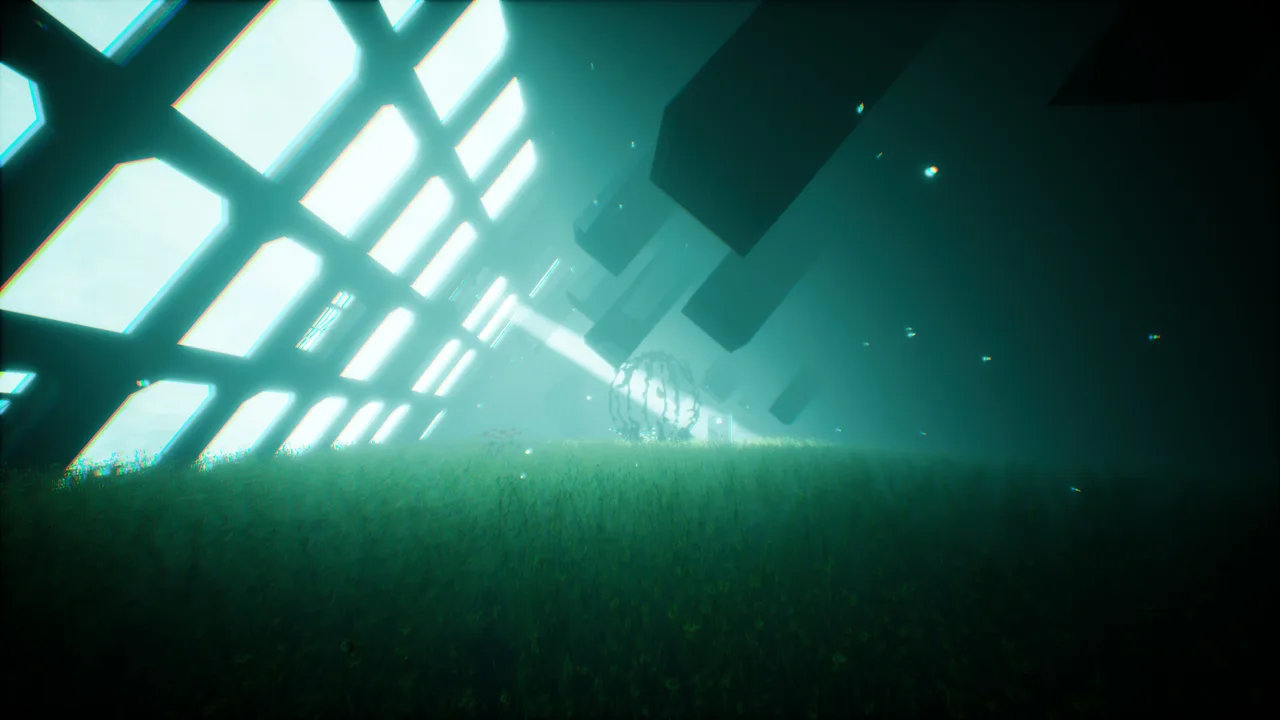 Image: Steam / Lightersgames
The developer illustrates this with a single object that can produce circular, square, or triangular shadows depending on perspective. Similar silhouettes can also conceal different solid shapes. A good approach is to consider both what an object looks like and what it could become when illuminated.
The game presents five mechanics across three chapters:
| Mechanic | Described effect | A useful question to ask |
|---|---|---|
| Illuminate | Turns flat silhouettes into solid objects with weight, collision, and physics | Could this shape become a platform, weight, or obstacle? |
| Absorb | Removes volume and mass, returning objects to static, weightless silhouettes | Would removing this object’s physical presence help? |
| Mirror | Duplicates objects | Could another copy serve a separate purpose? |
| Lens | Changes object size | Could a different size make the object useful here? |
| Merge | Combines shapes into new forms | Could combining these forms create a needed tool? |
Why illumination changes a puzzle
The developer gives the example of a flat hexagon becoming a cube you can stand on. That transformation creates a physical surface where previously you had only an outline.
Steam also describes a cube that can weigh down a seesaw or block a rolling ball. Those examples suggest a practical way to think: examine the function you need before choosing the object.
Do you need weight? Something solid enough to obstruct movement? A surface to stand on? A good approach is to identify the physical job, then look for a shape that could perform it.
Why absorbing light matters
As this THANKS, LIGHT. FAQ explains, absorption reverses the transformation. Objects lose their three-dimensional presence and become static silhouettes. The developer’s example shows a rolling ball turning into a circle on the wall.
A useful tip is to treat removing light as an active puzzle tool. If an object’s mass or collision is causing a problem, consider whether flattening it could change the situation.
Avoid assuming every useful object should stay solid. Steam explicitly frames puzzles around deciding what to solidify, what to flatten, and when to make those changes.
How to approach a confusing room
If a puzzle feels difficult to read, break it into smaller questions:
- Which objects need physical weight or collision?
- Which objects might be more useful as silhouettes?
- Could an outline conceal a different solid form?
- Could duplication, resizing, or merging provide another option?
These are suggestions based on the described mechanics, rather than solutions to specific stages. They give you a framework for experimenting without spoiling individual puzzles.
Demo, Game Length, Story, and Atmosphere
For players deciding whether to wishlist, this THANKS, LIGHT. FAQ has two useful starting points: Steam lists a downloadable demo, and the full game advertises three chapters, 6+ hours of play, and over 60 stages.
 Image: YouTube / GSE | GAME SOURCE ENTERTAINMENT
Treat the stated playtime as a product estimate. Your own pace will depend on how you approach the puzzles; it is not a guaranteed completion time.
| Content or feature | What is listed |
|---|---|
| Demo | Downloadable demo on Steam |
| Chapter count | Three |
| Advertised playtime | 6+ hours |
| Advertised stage count | 60+ |
| Play mode | Single-player |
| Steam features | Achievements, Steam Cloud, and Family Sharing |
| Story premise | The Administrator promises a perfect puzzle experience while cracks appear in his world |
You can visit the THANKS, LIGHT. Steam page to download the demo or add the game to your wishlist.
The available information does not specify the demo’s length, its exact content, or whether demo progress transfers to the full release. A sensible approach is to use it to assess the central light mechanic, camera comfort, and atmosphere.
What kind of world will you explore?
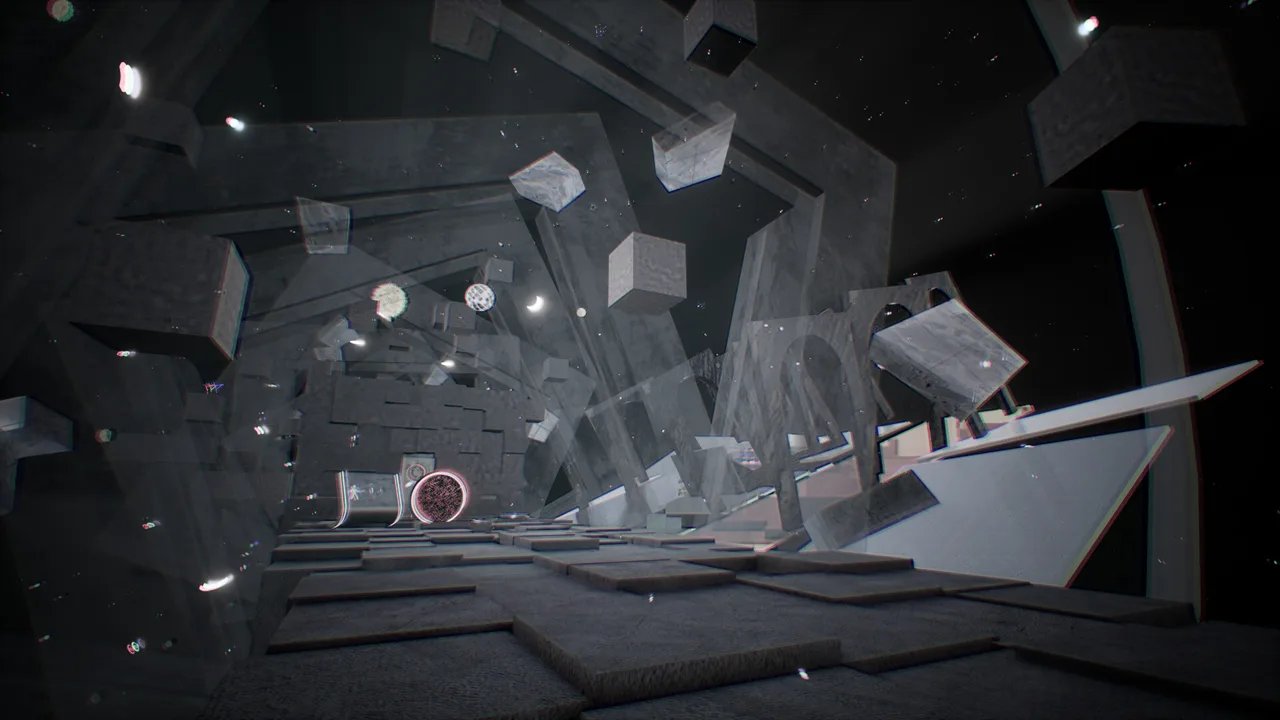
The environments range from large marble halls to familiar-looking corridors and fractured black-and-white spaces. Each chapter has a distinct atmosphere, with the developer emphasizing changing visuals and mechanics.
The story centers on the Administrator and his promise of a carefully designed, perfect experience. Cracks in that world create the mystery behind the puzzles.
If you enjoy inspecting strange spaces and questioning what you see, that premise gives the game an additional point of interest beyond solving individual rooms.
Is it like Portal or Superliminal?
The developer places THANKS, LIGHT. alongside Portal, Superliminal, and The Talos Principle when describing its appeal to fans of first-person perception puzzles. Portal developer Jeep Barnett has also praised its puzzle mechanics and remote object interaction.
Those comparisons help describe the general direction. They do not establish that THANKS, LIGHT. uses portals, follows another game’s structure, or offers identical difficulty. Its defining mechanic remains the relationship between illumination and physical form.
PC Requirements and Steam Deck Compatibility
The hardware section of this THANKS, LIGHT. FAQ is worth checking before downloading. Steam lists Windows requirements and marks the game Steam Deck Verified.
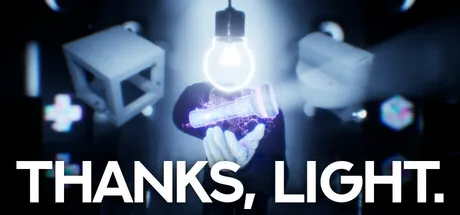 Image: Steam / Lightersgames
For desktop PC players, the minimum specification targets 1080p at 30 fps on Medium settings. The recommended specification targets 1080p at 60 fps on High/Ultra settings. These are stated targets, not a promise of identical performance on every configuration.
| Component | Minimum | Recommended |
|---|---|---|
| Operating system | Windows 10 64-bit, version 1909 or later | Windows 10 64-bit or Windows 11 |
| Processor | Intel Core i5-9400 / AMD Ryzen 5 3500X | Intel Core i5-10600 / AMD Ryzen 5 3600 |
| Memory | 8 GB RAM | 16 GB RAM |
| Graphics | NVIDIA GeForce GTX 1660, 6 GB / AMD Radeon RX 590, 8 GB VRAM | NVIDIA GeForce RTX 2060, 6 GB / AMD Radeon RX 5700, 8 GB |
| DirectX | Version 11 | Version 11 |
| Available storage | 10 GB | 12 GB |
| Sound card | DirectX-compatible | DirectX-compatible |
| Storage advice | SSD recommended | SSD recommended |
| Performance target | 1080p, 30 fps, Medium | 1080p, 60 fps, High/Ultra |
Both tiers require a 64-bit processor and operating system.
When comparing your computer, check the processor, graphics card, and RAM together. Meeting one listed component does not establish that the entire machine meets the specification.
The demo provides an opportunity to assess how it runs on your hardware. Any observations from the demo should remain specific to that version rather than being treated as a guarantee for the full release.
Steam Deck Verified status is useful for handheld shoppers, but the available information does not give a Deck-specific frame-rate target, battery-life estimate, or recommended settings. Likewise, the listed Windows requirements do not establish native macOS or Linux support.
Languages, Accessibility, and Your Prelaunch Checklist
This THANKS, LIGHT. FAQ also covers details that can affect whether the game fits your setup: language support, comfort options, and input features.
Steam lists 21 languages for interface text and subtitles. English additionally has full audio support. The other listed languages include Korean, Japanese, Simplified Chinese, Traditional Chinese, French, Italian, German, Spanish–Spain, and Brazilian Portuguese, among others.
If you need spoken dialogue in a particular language, check the audio column separately. Interface and subtitle support do not imply a full voice track.
The listed accessibility options include:
- Subtitle options
- Camera comfort
- Custom volume controls
- Stereo sound
- Playability without quick-time events
Steam also lists Xbox controllers. The provided details do not establish support for every controller model or describe specific button mappings.
Before launch, a practical checklist is to compare your PC with the requirements, check your preferred language, and try the demo if camera comfort is a concern. If you plan to use a controller, the demo may also help you assess your setup.
For the full game, keep the current release date in mind and check the Steam page near launch. A purchase price is not shown in the available prelaunch details, so there is no confirmed figure to budget against here.
FAQ
When does THANKS, LIGHT. release?
THANKS, LIGHT. is scheduled for October 14, 2026. The developer website lists 8:00 a.m. PDT, or 3:00 p.m. UTC. This THANKS, LIGHT. FAQ reflects the current release fields as of October 9; an older announcement mentions October 15.
Is there a THANKS, LIGHT. demo?
Yes. Steam lists a downloadable demo. Its exact length and whether progress carries into the full game are not specified in the available details.
How long is THANKS, LIGHT., and does it have multiplayer?
The Steam listing advertises 6+ hours of play, over 60 stages, and three chapters. It lists single-player mode; multiplayer is not listed. The advertised duration is an estimate rather than a fixed completion time.
Can you play THANKS, LIGHT. on Steam Deck?
Steam marks THANKS, LIGHT. as Verified for Steam Deck. No handheld-specific performance target or battery-life estimate is provided. Desktop requirements list Windows, with 8 GB RAM at minimum and 16 GB recommended.
Continue with
 THANKS, LIGHT. platforms and wishlist: Your Launch GuideTHANKS, LIGHT. platforms and wishlist guide: check Steam launch timing, PlayStation status, Steam Deck support, and how to track a light-powered puzzler.
More in Release
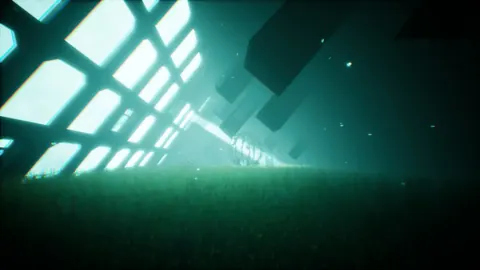
THANKS, LIGHT. demo: Download, Puzzles, and PC Specs
Play the THANKS, LIGHT. demo on Steam. Explore light-based puzzles, check PC requirements, and learn how this demo differs from the October 2026 release.
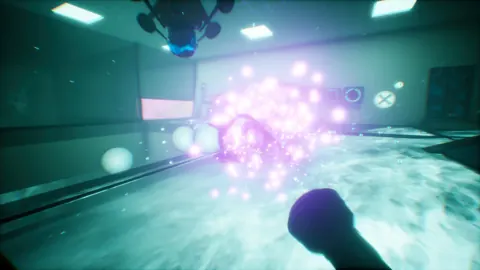
THANKS, LIGHT. developer and publisher: Who Makes It?
Meet the THANKS, LIGHT. developer and publisher, explore its light-based puzzles, and check the planned release date, demo, and Steam Deck support today.
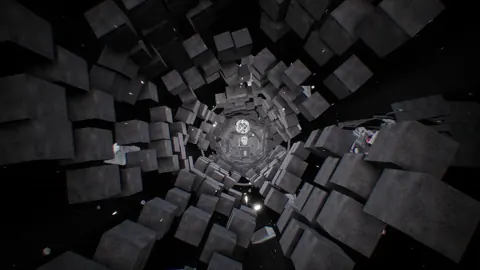
THANKS, LIGHT. release date countdown: Launch Guide
Track THANKS, LIGHT. release date countdown for October 14, 2026, at 8 AM PDT. Check launch timing, Steam Deck status, demo access, and PC requirements.
THANKS, LIGHT. system requirements: Can Your PC Run It?
Check THANKS, LIGHT. system requirements, compare minimum and recommended PC specs, and prepare for launch with RAM, GPU, storage, and Steam Deck details.
Join the community
Official channels for news, updates and player help: