
Coming soon · Release date: October 14, 2026 · Info based on official announcements
UpdatedTHANKS, LIGHT. demo: Download, Puzzles, and PC Specs
Play the THANKS, LIGHT. demo on Steam. Explore light-based puzzles, check PC requirements, and learn how this demo differs from the October 2026 release.
Jump to
Is the THANKS, LIGHT. demo available now?
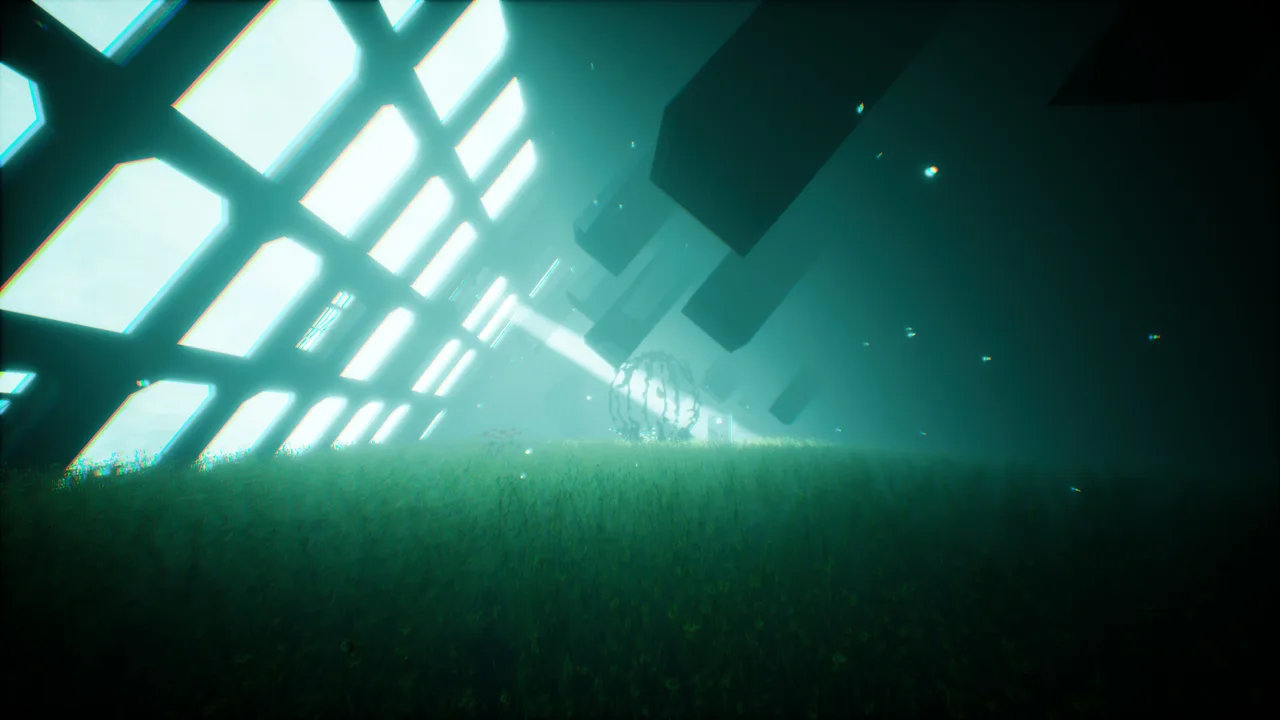
A flat shape on a wall could become the staircase you need—if you give it light. The THANKS, LIGHT. demo lets you explore that physics-changing idea for free before the full game’s planned October 14, 2026 launch. Downloading the THANKS, LIGHT. demo gives you a way to judge whether its spatial puzzles and unsettling atmosphere belong on your wishlist.
Yes, the demo is already available on Steam. It launched on November 12, 2024, and has its own store listing, separate from the upcoming full release. Lightersgames develops both versions, with Game Source Entertainment publishing them.
The demo’s Steam rating is Very Positive, with 93% of 79 reviews positive. That is encouraging feedback from a relatively small review pool, rather than a guarantee that every puzzle fan will enjoy it.
| Demo detail | Current listing |
|---|---|
| Price | Free |
| Release date | November 12, 2024 |
| Developer | Lightersgames |
| Publisher | Game Source Entertainment |
| Mode | Single-player |
| Steam review summary | Very Positive; 93% of 79 reviews positive |
To install it:
- Open the THANKS, LIGHT. demo download page.
- Select Install Demo.
- Follow Steam’s installation prompts, checking the requirements below before downloading.
You can also find a demo download option on the full game’s Steam page. Keeping the two listings separate is useful: the demo has its own reviews, storage requirements, and Steam Deck compatibility status.
How light changes the puzzles
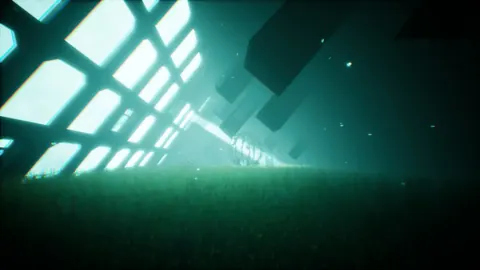
The central idea in THANKS, LIGHT. is that illumination changes an object’s physical state. A silhouette can become a solid form with weight, collision, and gravity. Absorbing its light removes those properties, flattening it again.
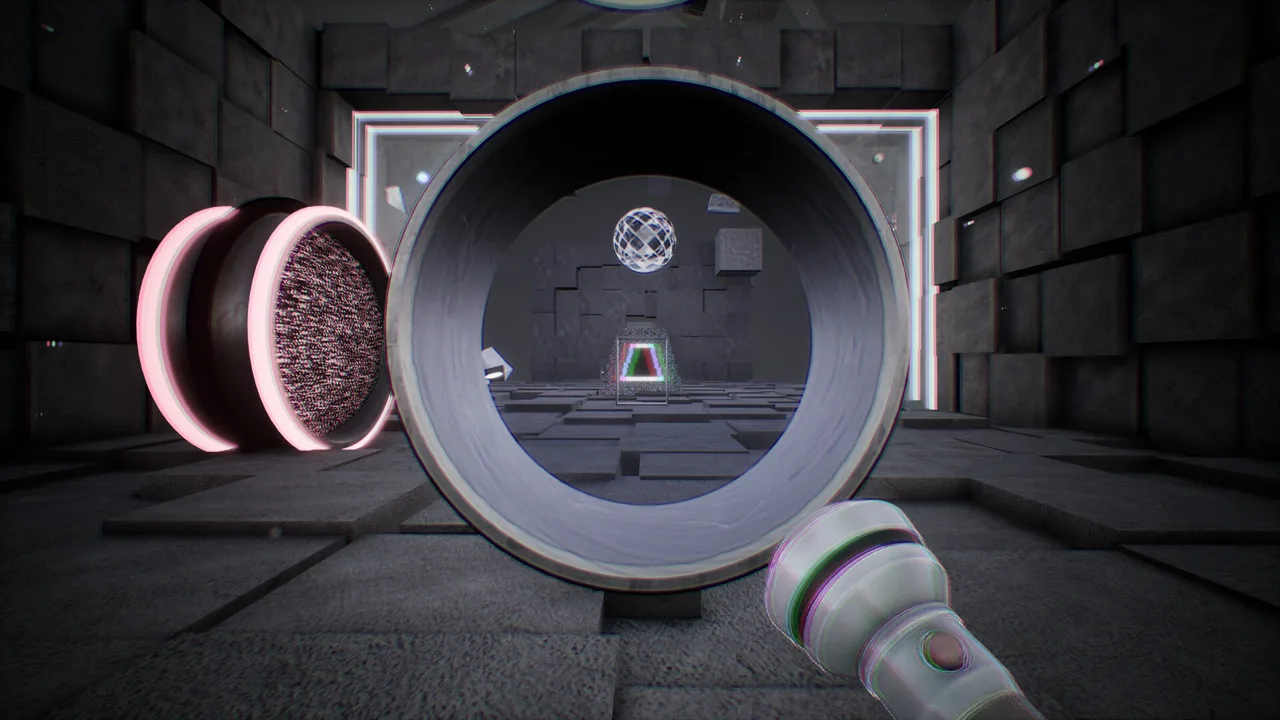 Image: Steam / Lightersgames
That makes your flashlight a tool for rearranging the environment. You are deciding which objects should occupy space, which should carry weight, and which should stop behaving like physical obstacles.
The demo description gives concrete examples: a square can unfold into a staircase, while an outline can become a pillar. Once solid, objects can be climbed, pushed, or dropped. Removing light can stop a rolling ball or turn an obstructing wall into an opening.
The broader game also introduces mirrors, lenses, and merging. These expand the same idea by changing an object’s number, size, or form.
| Game mechanic | Described effect | Puzzle question to consider |
|---|---|---|
| Illuminate | Gives a silhouette volume and physical properties | Would a solid object provide support or useful weight? |
| Absorb | Removes volume and mass, leaving a flat silhouette | Would flattening this object remove an obstruction? |
| Mirror | Duplicates objects | Could another object help solve the arrangement? |
| Lens | Resizes objects | Would changing the size make the form useful? |
| Merge | Combines two forms into a new one | Could a combined shape serve a different purpose? |
These are advertised game mechanics; neither store description clearly identifies every mechanic included in the downloadable demo. Treat the table as an explanation of the game’s design, rather than a checklist of guaranteed demo content.
Perspective matters, too. The official website illustrates how one three-dimensional object can produce circular, square, or triangular silhouettes depending on the viewing angle. Matching outlines therefore do not necessarily mean matching objects.
For players considering the THANKS, LIGHT. demo, that is the main appeal: an ordinary-looking shape can conceal a useful structure. The puzzle is partly about recognizing what an object could become, then deciding when its physical properties should exist.
Practical tips for approaching the demo
A good approach is to think about shape, physical state, and timing separately. Those ideas follow directly from the game’s light and absorption mechanics, and they give you useful questions to ask when an arrangement seems confusing.
 Image: Steam / Lightersgames
Decide what the object needs to do
Before changing anything, identify the immediate problem. You might need something to stand on, weight to influence a seesaw, or an opening through an obstacle.
Then consider whether solidity helps. A cube’s weight can be useful when tipping a seesaw, but its collision can also block a rolling ball. The same object can serve different purposes depending on the surrounding arrangement.
Try framing the puzzle as a short question: “Do I need this object to support me, obstruct something, or disappear from the way?” That is more focused than illuminating every visible shape without a purpose.
Reconsider objects after changing their state
If an object seems useless while flat, consider what volume might add. If it seems troublesome while solid, consider what absorbing its light would remove.
For example, the described rolling-ball interaction suggests a useful line of thought: motion itself can be part of the problem, so switching off physical properties may matter as much as creating a solid platform.
This is strategy advice, not a prescribed solution. The correct sequence depends on the particular puzzle.
Examine silhouettes from another perspective
Because different forms can share similar outlines, a good approach is to inspect the surrounding geometry and reconsider your viewing angle when a shape’s purpose is unclear.
Avoid assuming that every square must become a simple cube. The demo description specifically uses a square that unfolds into a staircase. Let the revealed form guide your next decision.
Change one variable at a time
When possible, try one light-state change and observe its effect before making another. This can help you distinguish whether a result came from added weight, new collision, or the removal of an obstacle.
For the THANKS, LIGHT. demo, this approach fits the core mechanic: you are learning what illumination changes in a specific arrangement. It also gives you a clearer basis for choosing the next action.
Pay attention to the environment between puzzles. The game describes a supposedly flawless world overseen by an Administrator, with architecture that becomes increasingly strange. Its spaces are part of the mystery as well as the setting.
THANKS, LIGHT. demo PC requirements and compatibility
The demo lists Windows requirements and needs 6 GB of available storage at both minimum and recommended specifications. An SSD is recommended.
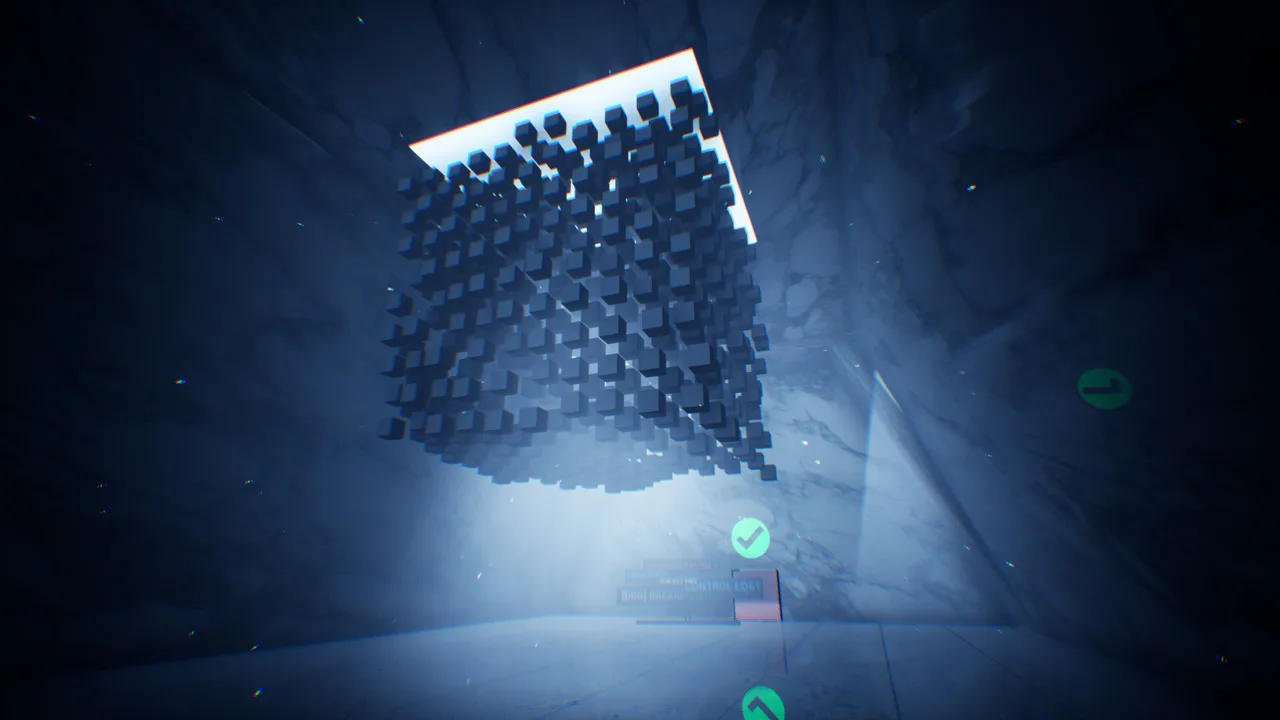 Image: Steam / Lightersgames
Its stated performance targets are 1080p at 60 fps on Medium settings for the minimum configuration and 1080p at 60 fps on High/Ultra settings for the recommended configuration. These are developer targets; they do not guarantee identical performance on every PC.
| Component | Demo minimum | Demo recommended |
|---|---|---|
| Operating system | Windows 10 64-bit, version 1909 or later | Windows 10 64-bit or Windows 11 |
| Processor | Intel Core i5-9400 / AMD Ryzen 5 3500X | Intel Core i5-10600 / AMD Ryzen 5 3600 |
| Memory | 8 GB RAM | 16 GB RAM |
| Graphics | NVIDIA GeForce GTX 1660, 6 GB / AMD Radeon RX 590, 8 GB VRAM | NVIDIA GeForce RTX 2060, 6 GB / AMD Radeon RX 5700, 8 GB |
| DirectX | Version 11 | Version 11 |
| Available storage | 6 GB | 6 GB |
| Sound | DirectX-compatible sound card | DirectX-compatible sound card |
| Listed performance target | 1080p, 60 fps, Medium | 1080p, 60 fps, High/Ultra |
Compare your CPU, GPU, and memory with the demo’s specifications before installing. Storage alone does not establish whether your computer meets the requirements.
Also check the correct listing when planning for launch. The full game requires 10 GB at minimum and 12 GB at recommended specifications. Its minimum performance target is 1080p at 30 fps on Medium, which differs from the demo’s stated target.
For handheld players, the distinction is especially relevant: the full game is Steam Deck Verified, while the demo’s status is Unknown. The full game’s verification should not be treated as confirmation that the separate demo has the same status.
The demo lists English interface text and subtitles, alongside 23 other languages. English full audio is not marked on its language table. Xbox controllers are also listed, although that entry does not explain every aspect of controller support.
Demo versus full game: what to expect at launch
The full version is planned for October 14, 2026 on Steam. The official website specifies 8:00 AM PDT, equivalent to 3:00 PM UTC, for launch.
Its advertised scope includes three chapters, 6+ hours of play, and over 60 stages. Those figures describe the full game’s scope; they should not be used as a confirmed running time or stage count for the THANKS, LIGHT. demo.
Although the demo page repeats that broader description, it does not clearly define how much of it is playable in the demo.
| Detail | Demo | Full game |
|---|---|---|
| Availability | Released November 12, 2024 | Planned for October 14, 2026 |
| Purchase status | Free demo | Upcoming full release; price not specified here |
| Confirmed playable scope | Demo length and stage count unspecified | Three chapters, 6+ hours, 60+ stages advertised |
| Storage requirements | 6 GB | 10 GB minimum; 12 GB recommended |
| Steam Deck status | Unknown | Verified |
| English language listing | Interface and subtitles | Interface, full audio, and subtitles |
The full game’s environments progress through marble halls, strangely familiar corridors, and fractured black-and-white spaces. Its Administrator promises a perfect puzzle experience, while cracks in that carefully arranged world suggest something more troubling underneath.
That premise adds a reason to look beyond the immediate puzzle machinery. If eerie architecture and perception-based challenges appeal to you, the demo offers a practical starting point.
Comparisons with Portal, Superliminal, and The Talos Principle help describe the intended audience: players who enjoy first-person spatial reasoning. They do not establish that THANKS, LIGHT. has identical pacing, difficulty, or narrative structure.
After trying it, consider whether changing an object’s physical state makes you curious to experiment further. You can use the THANKS, LIGHT. full game Steam page to wishlist the release and review its launch information.
FAQ
Is the THANKS, LIGHT. demo free?
Yes. Steam lists it as a free demo with an Install Demo option. Its release date is November 12, 2024, so you can download it before the full game’s planned launch.
How long is the demo?
A specific demo duration is not clearly stated. The advertised 6+ hours, three chapters, and 60+ stages describe the full game’s scope and should not be assumed to represent the demo’s playable content.
Does the demo work on Steam Deck?
The demo’s Steam Deck compatibility is listed as Unknown. The full game is Verified, but that separate rating does not establish the demo’s compatibility.
When does the full game release?
Steam lists October 14, 2026 as the planned release date. The official website gives a launch time of 8:00 AM PDT / 3:00 PM UTC. As of October 9, the full game is still upcoming.
Continue with
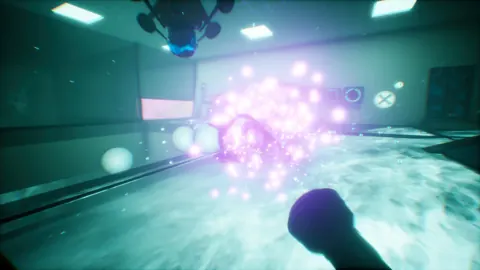 THANKS, LIGHT. developer and publisher: Who Makes It?Meet the THANKS, LIGHT. developer and publisher, explore its light-based puzzles, and check the planned release date, demo, and Steam Deck support today.
More in Release
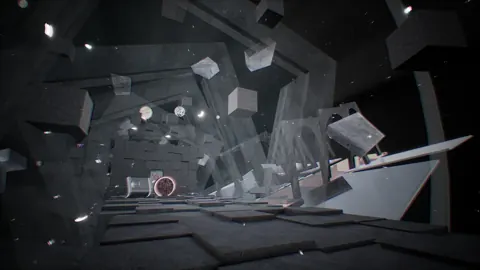
THANKS, LIGHT. FAQ: Release Date, Demo and PC Details
THANKS, LIGHT. FAQ covers the October 14 release, demo, Steam Deck status, PC specs, and light-based puzzles. Find out what to expect ahead of launch.
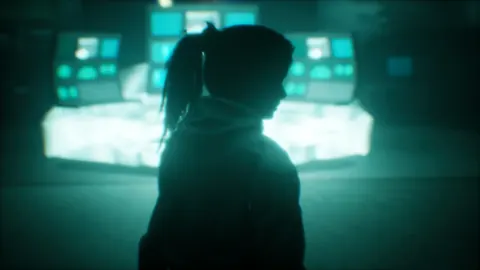
THANKS, LIGHT. platforms and wishlist: Your Launch Guide
THANKS, LIGHT. platforms and wishlist guide: check Steam launch timing, PlayStation status, Steam Deck support, and how to track a light-powered puzzler.
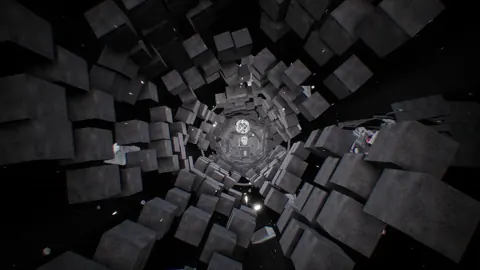
THANKS, LIGHT. release date countdown: Launch Guide
Track THANKS, LIGHT. release date countdown for October 14, 2026, at 8 AM PDT. Check launch timing, Steam Deck status, demo access, and PC requirements.
THANKS, LIGHT. system requirements: Can Your PC Run It?
Check THANKS, LIGHT. system requirements, compare minimum and recommended PC specs, and prepare for launch with RAM, GPU, storage, and Steam Deck details.
Join the community
Official channels for news, updates and player help: